Monday, February 23, 2009

@ our Dallas Home

Jennifer is ecstatic to be out of the hospital. Despite appreciation for the special attention, she's happy to be away from the poking, prodding and sleepless nights. Jennifer received in-patient care until late into the afternoon on Saturday, February 21st.

We were told to expect a 3-7 day stay in the hospital after surgery. Jennifer was in for 5. We’ve been in Dallas for a little over a week, since Sunday February 15th. The remainder of our stay in Dallas will be in a rental house we found on www.homeaway.com.

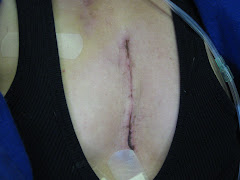
As with many caring for Jennifer, the anesthesiologist took a special interest, having felt an immediate connection. Young and female, she made sure extra care and attention was given to the suture.

A comparatively small scar will result, ensured by the entire surgical team from incision to stitch. Jennifer’s scar will be a badge of honor, and serve to remind us of her strength throughout the process.

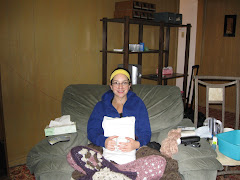
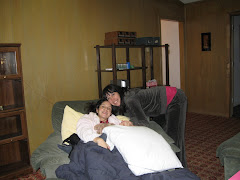
We are focused day-by-day on rehabilitation. Jennifer’s days are filled with rest, light eating, and a variety of light exercises. Nights are filled with intermittent sleep, early hour pain medication, and the occasional bloody nose.

Shortness of breath persists, even more so than before surgery. The culprit, at least partially, is atelectasis. A common postoperative complication, atelectasis is a collapse of lung tissue. It is a condition where the alveoli are deflated. Alveoli are "spherical outcroppings of the respiratory bronchioles and are the primary sites of gas exchange with the blood."

Jennifer’s oxygen saturation levels are below pre-surgery levels at rest and with exertion. More oxygen is required to maintain minimum desired level of saturation, 90%. What took 2-3 liters at elevation in Albuquerque is now taking 4-6 liters in Dallas.

At least for the near future, Jennifer is expected to maintain use of assisted oxygen and the intravenous medication Flolan. As we move along, levels of each will be lowered and Jennifer's reaction gauged. We are unsure what outcome can be achieved. While some Pulmonary Hypertension will always exist, we are hopeful we can eliminate the use of assisted oxygen and replace the use of Flolan with an oral medication.

Focusing on the present, Jennifer’s immediate goal is to complete breathing exercises every 2 hours, and to take increasingly longer walks every 4 hours. The respiratory exercises are done using an incentive spirometer. Anyone who’s suffered from a lung or heart ailment will remember this device, likely with disdain. But combined with very light physical exertion, its use is critically important. Walking consists of a few laps around the living room.

It is difficult to interpret what is attributable to surgical recovery and what our new “baseline” is. We continue to monitor Jennifer’s health closely, with pending follow-up appointments scheduled over the next week.

A good resource to plan for life after open heart surgery is named the AHA / ACC 2008 Guidelines of Adults with Congenital Heart Disease http://circ.ahajournals.org/cgi/reprint/CIRCULATIONAHA.108.190690.

As health care has advanced, a larger community of adults with congenital heart disease exists. Despite operative success, the condition should be monitored throughout life. With the importance often under-estimated, these guidelines are a great place to start.

Each day brings greater regularity. Small but important steps are being made towards realizing the benefits of surgery.

Friday, February 20, 2009

Big News from Dallas: Open Heart Surgery

Open heart surgery was a major success! Jennifer's heart defects have been fully repaired.

The pulmonary vein anomaly, defined as a "congenital heart defect," existed since birth. The atrial septal defect, the hole between the right and left atrium chambers in Jennifer's heart, resulted from high pressures caused by the pulmonary hypertension.

The current belief is the pulmonary hypertension has been "neutralized." Meaning, what exists will remain but we're hopeful it will get no worse moving forward. We will learn more as we move along over the next few weeks.

The pulmonary vein anomaly, once thought to include only 1 of 3 veins on the right side of Jennifer's heart, was more extensive. All 3 veins needed to be "baffled" so oxygenated, "blue" blood could flow properly to the left side of the heart for distribution throughout the vascular system.

The surgeon, Dr. Ring, was prepared to address this additional complexity. Dr. Torres recommended Dr. Ring for this very purpose, knowing he would be poised and ready to handle complications in stride.

Improvements have been recorded for most of the vital pressure measurements, post-operation. Jennifer has achieved her goal, set so many months ago, of a successful surgical outcome.

Jennifer initially recovered in the ICU until Thursday night, at which point she was transferred around 10 pm CST to a "step down" unit in the Telemetry section of the hospital.

As of Friday morning, coinciding with the writing of this post, the plan and goal of medical staff is to discharge Jennifer later today or Saturday.

We are working through a few complications, which are not expected to persist. Jennifer is feeling nauseous, tired, and is in some pain, but all things considered we could not have scripted a better outcome.

There's a long road to recovery, which we can now focus on. The total rehabilitation period can last up to 3 months, with the first phase 6-8 weeks.

http://www.webmd.com/heart-disease/guide/heart-disease-recovering-after-heart-surgery gives some sense of what recovery will entail, as it talks about standard rehabilitation for overcoming heart surgery.

We have a new goal, which we're calling "back to basics." This means establishing a routine, to include things such as normal and deep breathing, eating a regularly, healthy diet, walking and other exercise, copious rest, etc.

This morning Jennifer had a bagel with cream cheese, banana, and cranberry juice. She's also taking 3 walks a day. In fact, Jennifer purportedly set a new speed record for walking the perimeter of the ICU. So we're on track.

A testament to the power of the human will, this experience has reinforced how blessed we feel to be surrounded by such a powerful support network.

Friends, family, colleagues and others have come to our aid, helping in any way possible to ease the burden Jennifer and her caregivers bear. When the load's been greatest, the support's been strongest.

The surgical team, physicians, nurses and others have all taken a special interest in Jennifer. It's clear her attitude and youth have won over their hearts, giving us a special level of care and oversight.

We hardly have a minute where someone's not coming by and checking on her health, making sure she's comfortable and disciplined about her recovery.

While some of you have heard this, it's worth repeating. Not all battles are won, and this war is far from over. But in the immortal words of Mark Twain "it's not the size of the dog in the fight, it's the size of the fight in the dog." Or in this case, the beautiful young woman.

Monday, February 16, 2009

NEWS FROM DALLAS: Will there be OPEN HEART SURGERY?

A right heart catheterization was completed at 12 pm CST Monday, 16 Feb 2009 by Dr. John Warner http://www.utsouthwestern.edu/findfac/professional/0,,17742,00.html.

Good news! Decision rendered by Dr. Ring, surgeon http://www.utsouthwestern.edu/findfac/professional/0,,16089,00.html , is that open heart surgery is a go for Tuesday 17 Feb 2009.

3 primary indicators are all positive from the right heart catheterization, which is an invasive procedure to closely evaluate the pressures in the heart. A catheter was routed through Jennifer's femoral vein (in her right leg) into her right atrium, right ventrical, and pulmonary artery.

1). The first, pulmonary vascular resistance (PVR), has improved from 8.1 three months ago to 6.7. Measured in dynes, PVR is a term used to define the resistance to flow that must be overcome from the vasculature of the lungs.

2). Secondly, pulmonary artery pressure, a measurement of blood pressure in the pulmonary artery, has improved from 64 initially, to the 50s, and now resides in the 30s.

3). Third, the degree of "left-to-right" shunting. Jennifer has a hole in her heart, defined specifically as an atrial septal defect (ASD). The shunting can be defined by the volume of blood that flows through it for a period of time. In Jennifer's case, the volume has decreased from 4 liters to 2.5, representative of half the total that should be pumped from her heart to vascular system.

While the shunting is not ideal, it has both gone down and is an indicator of what could result during the recovery period. Meaning, significant progress quickly is possible after the surgery, given how much the shunt is being utilized.

Surgery is scheduled for 7 am. Jennifer will be wheeled down to the Operating Room (OR) at 6 am for preparations.

During the 3-4 hours, Jennifer's heart will be momentarily stopped. She will remain stable through the use of a heart-lung machine. During that time, a simultaneous repair will be made to close the hole in her heart and "baffle" her pulmonary vein.

One of Jennifer's pulmonary veins, typically architected to deliver oxygenated blood from the lungs to the left side of the heart, is currently "recycling" blood back into the right side of the heart. This creates a "loop within a loop."

The surgery will redesign this vein to deliver oxygenated blood, alongside the other pulmonary veins, to the left side of the heart.

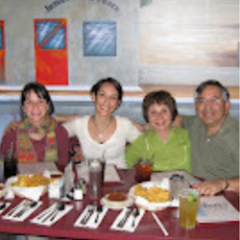
Friends and family remain positive, highly optimistic, and confident. Despite the seriousness of the situation, we are all managing to share a few laughs.

Thursday, January 29, 2009

Surgery Update_February 2009


As you know, we will be headed back to UTSW in a few weeks. Here's the plan; I will have a catheterization on February 16th, which will determine if pressures have improved, stabilized or increased. If pressures have either improved or stabalized then it is my understanding surgery will be a go ahead the following day (February 17th). If they have increased, we will have to re-evaluate plan.


I have spent the last three months preparing for surgery, as I am thinking and acting optimistically. Family and close friends will be meeting us in Dallas, for support. If surgery is not a go ahead I imagine I may need more emotional support than if surgery does happen, therefore, I feel very fortunate to have such gracious family and friends.

In the event I do have surgery, we will be staying at a rental home for about 2 1/2 weeks and then return to New Mexico. During this time of recovery I will have somebody keep my blog up to date so you all can keep up with my progress.

I have received such support this year; the prayers, thoughts and emails have given me such strength. Please continue praying, thinking of me and I'm not opposed to the good ole' keeping your fingers crossed for me, and my family, over the next few weeks.
Activity Update:
I'm happy to report that I am working out 2- 3 times per week. Workout includes a combination of the following; yoga 2 times per week, Cardio 2-3 times per weeks, and light weights. Unfortunetly, I recently discovered that I was doing too much and needed to be better about watching my saturation (O2) levels, as they were dropping below the 90 O2 level. So, I've cutback on the intensity of the work-out and increased my liter flow while working out. As I've mentioned to a few of you, I'm probably the happiest person in the gym. Go figure, imagine this, the girl with the O2 and other accessories hanging from her body is ALL SMILES!!! I'm so happy to be working out again.
Medications:
No changes to medications. BUMMER!


Sunday, January 4, 2009

Some Personal Thoughts_Part I


When do I think my illness first took up occupancy inside me?


Given I have a congenital heart defect, it has always been with me.
As for, when do I think the PH started to occupy me, well, I think it was hiding for a while as far back as college (14 years ago), that I can remember. As a dancer who trained 3-5 hours (per day) I lacked stamina, which I always didn't understand. I really noticed a change when I moved back to NM in 2000. From that time on shortness of breath and anxiety worsened.


Who else is involved?
Those I am in physical contact with on a day to day or regularly basis; Chris, Co-workers, Parents, Friends, Relatives and of course my (2) kitty cats.


How does my health effect these relationships?
Not able to take a brisk walk to grab coffee with co-workers. Although, happy to say brisk walks are more feasible now that I am on Flolan.

Planning or rather having to change or modify social functions so that they are within my physical capabilities. Activities that I enjoy but are unable to do (Right now!); hiking, hot tubing, skiing, and dancing with my Girlfriends.

Other people whom are affected by my health:
Acquintances. I'd like to think I have remained positive throughout this experience. Therefore, I hope I have touched people in a positive way.


What are the worst things about it?
Calling it, IT. No really! PH is not something you can refer to as a pronoun or ignore. It has a name, Pulmonary Hypertension. PH takes on a life of its own, even though it lives within you. Speaking from only my personal experience ONLY, PH is mostly physically pain free. Instead, it is what I’ll compare to as a “Prison”. A prison because although I have the physical components; the legs and the emotional drive; desire, your body dominates and takes over those two motivating factors. PH has a weird way of discouraging me, because I WAN’T to walk up that hill but my body is communicating that I CAN’T walk up that hill. For me that is the hardest part. Hikes or even short walks became something I dreaded. I found it difficult even before starting a walk I felt anxious, nervous and even discouraged. I thought it was my lack of motivation, desire and drive for activity. Keep in mind I was still teaching ballet up until 6 months prior to my diagnosis. I had always been very active dancing 5-6 days a week so I couldn’t understand why I could be in such bad shape and lacked desire to do anything other than dancing. Even while teaching I could not demonstrate like I had.

Wednesday, December 3, 2008

My Emotional Journey


I started this blog to communicate and document the physical and emotional journey of this experience. Admittedly, I've done a better job communicating the physical aspect of my journey than the emotional side.

Why you ask? I need CONTROLLED JOURNALING! Not because I'd go on and on but rather because I don't know where to begin. This whole experience feels as if I'm living another person's life. Don't be mistaken, I do have my breakdowns. Actually, I decided a long time ago that I would not let my illness define my spirit. Given that, I avoid spending energy on myself as a patient or being sick, and instead, I focus on getting healthy. Also, I'd rather enjoy life being Jenn, the person that I know the best.

In the recent "Pulmonary Hypertension Association" Fall 2008 Newsletter I discovered an article on journalling. A study was done in 1994 "that showed those who wrote about stressful experiences for 20 minutes a day, three days a week, fared better than those who didn't and better than those who wrote on neutral subjects". In addition, the article provided questions to assist with starting the journaling process. THANK GOD!


With the help of this article and getting over a fear of opening a can of worms, I have begin journaling and will be posting these entries frequently.

Wednesday, November 19, 2008

TO DO Surgery OR NOT TO DO Surgery_UTSW Visit_November 10th, 2008

Great news!

  1. Pressures are now in an operable range. Since May, Pulmonary Vascular Resistant (PVR) pressures dropped from 10 to 8.3 PVR. The opererable range is between 6-8 PVR. Therefore, I am in the upper range of that threshold.

  2. Signs of shunting from right to left are now non-existant. An indicator that the Pulmonary Pressures have gone down. The Atrial Septal Defect (ASD), which is the hole in the upper chambers of my heart had been providing relief from these high pressures.

After the Right-Heart Catheterization, we meet with Dr.'s; Torres (Pulmonologist), Warner (Cardiologist) and Ring (Cardio Thoracic Surgeon) to get individual opinions on my progress. All are enthusiastic with my progress but collectively they agree that continuting my (medication and oxygen) therapy, for an additional 3-months, is beneficial in determining if PVR and Pulmonary pressures can continue to decrease or if they've plateu . There would be a short -term and long -term benefit from reducing the pressures. Not only would the surgery be less risky but the lower I can reduce my pressures prior to surgery may affect the degree of PH I will be left with from a longterm perspective. The Dr.'s reiterate, "there is no exact science " to conclude whether or not I will be left with PH, after surgery. As a result, I will continue the therapy, trust that pressures go down and maintain the confidence that a life WITHOUT Oxygen, Flolan and (even better) PH are around the corner.

So, in three-months (February 08), we will be headed back to UTSW for yet another Right-Heart Catheterization. With the support of my Dr.'s, I will go ahead and have surgery during that same visit, if pressures continue to decrease. Yeah!!! The Visit is schedule for the week of February 16th, 2009. It'll be a HAPPY NEW YEAR!

Activity: I have been riding my bike 1-2 miles, once or twice a week. I have also been back to yoga, also once or twice a week.

Medications: No change to medications (Flolan, Tracleer, Lasix, Warfarin/Coumadine and Oxygen)


Wednesday, October 29, 2008

PH Cartoons

These cartoons may be difficult to relate to if you are not a PH patient, but they also you give you a good sense of daily mental and physical obstacles for PH patients.

http://www.sobtoons.com/

Wednesday, October 15, 2008

Start of Flolan Medication_July 29, 2008


The Goal: 1) Surgery to insert Central Line IV 2). Begin Flolan medication.

Now that surgery is a possibility we have a new goal in sight; get my Pulmonary Vascular Resistance (PVR) pressures down.

As I mentioned, my PVR pressures are at 10 and they need to go down to the 6-8 range for surgery. Flolan is the Dr.'s drug of choice to assist with getting my pressures down. It is not only the oldest PH drug but also the most potent.

The first time Dr. Torres familiarized me with all the PH therapies was in Jan. 2008, prior to the Congenital Heart Defect diagnosis. As a PH patient, being put on Flolan is a good indicator that other therapies are not effective. In addition, Flolan often times is a long term and in even lifetime solution. Therefore, at that time I feared being put on this drug. I don't think I need to explain further, just look at the above pictures of me and the Flolan pump to see what's involved. Because there is an opportunity to fix the defect with surgery, and even cure the PH caused by the defect, I remain hopeful that the Flolan therapy is a short term solution.

Process: Arrive in Dallas on Saturday, July 26th. The usual crew; Chris and my parents. We spend Sunday and Monday training with Steven, the Accredo Pharmaceutical Nurse. He familiarizes us with mixing the drug and managing the pump. The processes and responsibilities involved with this drug is overwhelming. Not following the processes can result in; an accidental *bolus or the opposite, due to the drugs *half life of 3-6 minutes.

On Tuesday, July 29th I get the catheter inserted and start on Flolan. I am in the ICU for 2 days being closely monitored. This is protocol for anyone who starts this medication. After the first day Dr. Torres gives me the option for discharge. I think he felt confident in my abilities to manage the Flolan but also felt comfortable releasing me to my mother, the CNP. Either way, I wasn't ready, the thought of managing this drug was a little scary. We agreed that I'd stay another day and continue to increase my dosing.

I recall talking to my mom about the above events, prior to the visit. I mentioned that the stay in the ICU would be "restful" after a central line insertion and starting the Flolan. She responded with "The hospital is not a place to rest". My interpretation, although also true, if a patient is well enough to go home they are discharged.....it is not a hotel. What I did not anticipate, was that I would be interrupted from sleep every couple of hours to check vitals, change ice packs for medication, increase dosing, etc. This is in addition to the leads/wires, oxygen and IV connected and hanging from my body. All I can say is I slept very well in my hotel room that night after being released from the hospital. The entire trip was about 7 days; 2 days traveling; 2days training; and 3 days in the hospital.

Since July 29th, I have been increasing my dose every three days. I am now very comfortable mixing my medication and changing my dressing at the catheter site. As of October 10th, I have reached the goal for my dosing (30 ng/kg/min). I will remain at this dose until November 10th, my next visit to Dallas. During this visit, I will have yet another hearth catheterization to check my pressures. Keep your fingers crossed for me.

Additions to Daily/Weekly Activities Include; 1) Mixing medication on a daily basis 2). Carrying along back-up supplies and pump wherever I go. Not only has it added to my physical activities it has added to my mental activities. I have to remember that I have and IV coming out of my chest with about a 5 pound weight at the end of it. I frequently get up from the couch or bed and start walking away and then will feel a tug, reminding me of the extra luggage. Also, the added accessory of a fanny pack is not one that I favor. What can you do?

Medications: Oxygen (I am now able to be off the oxygen for periods of the day when I am relaxing and not doing a whole lot of activity), Bosantan, Warfarin, Flolan


Flolan side effects; jaw pain, which is similar to putting a sour candy in my mouth. This occurs every time I put something in my mouth; flushing, which looks like I have a sun burn on my face. In August, I developed a bad rash around my catheter sight. It was so uncomfortable that I just wanted to scratch my skin off. I became so obsessed that the rash spread throughout my chest and Chris had to initiate an intervention....a sarcasm intervention. Luckily sarcasm goes a long way in our house. That rash lasted about 3-4 weeks and is now completely gone.

New Phrases: Chris asks me now "How's it Flowing" Meaning, how's the O2 and Flolan flowing.

*Bolus is to administer a "large" dose of IV medication. A bolus of Flolan is highly discouraged within the medical community because it is a potent drug. Because patients mix and manage there own medication there is a window of opportunity for this to happen and also a common occurrence. Loosing consciousness, vomiting are just a couple of negative effects when a bolus occurs.


*The half-life of a drug is how long it takes for half of it to be eliminated from the bloodstream. For Flolan if I am not receiving the medication for 3-6 minutes I would have a similar reaction to a bolus.


Friday, August 1, 2008

Congetive Heart Defect - May 08

The Visit: As part of the Compass III research, I would repeat the following tests; MRI, Echocardiogram and a Right Heart Catheterization. These tests would determine whether Dr. Torres would add the second drug (Sildenefil) to my therapy. I was eager for this visit. Since being diagnosed with PH and having been on Bosantan for 4 months now, I was feeling good and hopeful that I would feel even better if an additional medication was added to my therapy.

The Goal: To add Sildenefil to my therapy.

The Process: After completing the MRI and echocardiogram I still awaited the right heart catheterization. Dr. Warner would perform the catheterization. He would measure my pulmonary pressures as required by the Compass III but also expressed interest in doing further exploring. He performed a right and left catheterization. During the procedure the Dr. Warner indicated that he had new information about my diagnosis but I did not understand the details of the findings. The procedure would be a little longer than intended but that was fine with me as this was very positive news.

The Outcome: Even better outcome than we had anticipated . There was now a cause for the Pulmonary Hypertension. A congenital heart defect. Because I no longer had Primary Pulmonary Arterial Hypertension but rather Secondary Pulmonary Hypertension, there was now hope to cure the Pulmonary Hypertension. It would be (3-4) weeks before we'd find out if surgery, to fix the defect, was a possibility. Dr. Torres would present my case to a team of Dr.'s and collectively they would determine my future. As Chris said at that time (and continues to say) we were "cautiously optimistic" that the Dr.'s would consider performing surgery to correct the defect and hopefully by correcting the defect this would also cure the PH. After the month long wait we received confirmation that surgery was an option.


Because of the change in diagnosis I would no longer be part of the Compass III research. I no longer was considered a PRIMARY Pulmonary Hypertensionon patient.

With surgery on the horizon came other therapies and goals. I would begin Flolan, a continuos IV medication, to reduce my Pulmonary Vascular Resistant (PVR) pressures. Reason being, my PVR's were at 10 and the Surgeon preferred to do surgery when those pressures were in between the 6-8 range. Therefore, it was to dangerous to perform surgery now.


New Diagnosis: Congenital Heart Defect; Pulmonary Vein Anomaly with an Atrial Septal Defect.


First off, if you are like me and are an obsessive GOOGLE R don't expect to find a lot of information about a Pulmonary Vein Anomaly. This is a rare condition in Adults. I have found a little bit of information about the Anomaly but not specific to my condition. My mother has found one article and she's a CNP, who has access to this data.